The Social Media Professor

  • Home
  • About The Social Media Professor
  • Speaking
  • Blog
  • Contact

Should you always be professional online?

March 8, 2015 by Niklas Myhr 2 Comments

A video response to this important question.

Filed Under: Personal Branding, Social Media, Uncategorized

4 Keys to Preparing a Successful Keynote Presentation

March 7, 2015 by Niklas Myhr Leave a Comment

Niklas Myhr The Social Media Professor Professional SpeakerIn recent years, I have been invited to speak on developments in social media and digital marketing in front of many audiences outside my regular classrooms. I very much enjoy these opportunities and it also forces me to stay up-to-date to be relevant out there in the “real world” which I believe benefits my regular students as well. By interacting with audiences not only during a talk but also before and after taking the stage, I develop new relationships and get a chance to learn from their experiences and insights in their industries and professions.

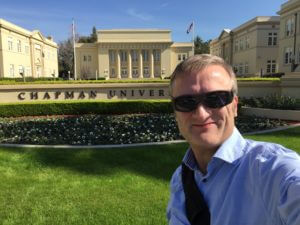
One of the keys to a successful keynote presentation is obviously how you prepare before the actual event and so far I have been fortunate to rate amongst the best speakers at various events and even as the best one out of 75 speakers at the Swedish Web Days in 2013. In this blog post, I will highlight a few pointers that have worked out for me:

  1. Interview the organizers in depth. The first step is to schedule a session with the organizers to ask them about their agenda and their objectives with the event to ensure that your talk falls in line with the overall theme and their possible change agenda if it is a company-specific event. During this conversation you should also take the opportunity to ask as many questions as you can about the expected audience such as where they come from, what companies they work for, what headaches they have, how old they are, what they are likely familiar with related to your topic, etc. One of the easiest things which is yet appreciated is to customize your presentation to at least talk about the location or the company you're at, such as if you have any prior experiences with them. This can often be light-hearted and you can reference events such as when I went to Gothenburg to attend a David Bowie concert.
  2. Learn about the industry and context of the audience on your own via contacts and online research. I have been exposed to a big variety of contexts as I have spoken for companies big and small, to for-profit companies, to non-profit organizations, to government agencies, to city governments, to executives, to marketing professionals, to small business owners, to Swedish moms, etc. While audiences share some characteristics across the board in terms of what they want out of a keynote presentation, they can also vary widely in some respects.
  3. Learn about the other speakers. Another thing that you can do is to ask and inquire about the other speakers on the program to understand more than what is often publicly available on an event website. Then you can learn how your presentation fits in the overall scheme of things. You can check out the other speakers on YouTube, their blogs, books, etc., in order to ensure that you maximize the value that you provide in your part while building upon what the participants will learn from the others. You can also ask the organizers if they have seeded any particular talking points to the other speakers that may be different from the ones that you have been assigned.
  4. Network with the other speakers. Potentially you could also reach out to the other speakers beforehand and express an interest in seeing them in connection with the event. You could simply network with them beforehand via social media platforms such as Twitter, LinkedIn, etc. Also, some organizers of big events invite speakers to informal dinners or get-togethers the night before the event and this is usually both enjoyable and a great opportunity to network with professional speakers that may help you land your next gig. Just remember to try to help them first 🙂 This can also make you relax a little bit because the next day when you get up on stage, you could have some new friends on your side that could have been more intimidating to have in the room had you not gotten a chance to speak with them beforehand.

Good luck with your own speaking and please let me know if you have any other tips!

Filed Under: Featured2, Speaking Tagged With: Featured

7 Secrets to the Socratic Method in an MBA Case Class

March 6, 2015 by Niklas Myhr 1 Comment

David - The Death of Socrates detail.jpg

For quite some time, I have been trying to adopt Socratic teaching in my MBA classes by asking questions rather than lecturing so that students can learn more by gradually coming up with insights themselves.

  • I got my Ph.D. at the Darden School of Business at the University of Virginia, where basically 100% of MBA classes are based on the case study methodology which is consistent with the Socratic method that the university's founder Thomas Jefferson in turn learned from his mentor William Small at the College of William & Mary.
  • I also wrote a case study Henk Learns to Swim about my self-lived experiences using the Socratic method in an Executive Education setting.
  • I have participated in numerous teaching seminars with Socratic teaching as an important area such as at Babson College Executive Education and while teaching at Tulane University, some Harvard professor I don't remember the name of came down to New Orleans to profess the virtues of the Harvard Case Method based on Socratic teaching.

So, do I feel that I master the art of asking questions to foster learning? No, not by a long shot. Yet, I believe that my best classes are those when the Socratic magic happens and everything just works the way they should. That is also why I am forever trying to improve in this area and would love it if Socrates were to come by and sit in on one of my MBA classes to give me some pointers.

In the meantime, here are some “secrets” that I have learned so far that are critical for a successful case discussion to take place:

  1. Identify 3 or 4 key learning points that I have printed out in large capital letters in front of me so that I ensure that I cover each one of those before classtime is over.
  2. Be flexible in terms of the order by which the learning points are covered. The responses you get from students may take you in an unexpected direction and cover an area that you perhaps had planned to discuss much later.
  3. Be patient waiting for a response and stare people down. When you feel that the silence is becoming almost unbearable, then be quiet for five more seconds. This is very difficult and I still fail to adhere to this principle many times as it is very tempting to kill such a silence with “the answer” even when those seconds represented the time students perhaps needed to come up with their own conclusion.
  4. Talk to students who tend to talk without getting called upon and explain to them that it is important that they allow others to think before they start offering their views.
  5. Call on everybody, not just the ones who raise their hands. The bigger the diversity of perspectives, backgrounds, and experiences, the richer and better the discussions.
  6. Encourage opposing views yet strive to foster and maintain a respectful tone in the classroom to encourage broad participation.
  7. Provoke students who have very strong opinions with sharp questions to probe deeper into their rationales so that they and others better can understand where their opinions came from.

Perhaps, another point could be added which is to be curious and enjoy learning yourself! So, what do you think? What have you learned from your favorite professors when it comes to teaching style that I and others can learn from?

Picture: “David – The Death of Socrates detail” by Tableau de Charles Matthew Griego, “La mort de Socrate”. – détail dérivé de (detail from) : David_-_The_Death_of_Socrates.jpg. Licensed under Public Domain via Wikimedia Commons.

Filed Under: Featured2, Pedagogy, Speaking

The Content Marketing Make-or-Buy Decision

March 5, 2015 by Niklas Myhr Leave a Comment

This week's student question from Alex Garrett:

I really enjoyed your lecture today and had one question in particular.  It seems to me that when a company chooses to build a content marketing strategy, they're now entering a market in which they might not know much about; such as writing, blogging, social media, etc.  Are there companies that specialize in selling content to these businesses whose resources are already spread thin?

 
My answer:

Hi Alex! RNiklas Myhr at Chapman University, The Social Media Professoregarding your question, the short answer is yes. The longer answer is that it may not be a new “market” per se that they are entering, rather they would be serving their very own market with useful information, insights, resources, etc, but in a new way, focusing on the problems and needs of their customers rather than directly offering them your product or service to resolve those problems.

Furthermore, the delivery or distribution of content marketing often involves new media that the company perhaps could be unaccustomed to and perhaps it is not the right thing for every company to become experts in managing say a YouTube channel. For this part, there definitely is a plethora of firms serving companies to help them package and distribute various bits and pieces of content pieces that is deemed relevant to the overall content marketing strategy.

Some firms also outsource the origination of relevant ideas for content marketing and this is the area in which a company risks losing its authenticity. The content could become too bland and boilerplate if it is literally created or written by someone without in-depth experience and insights about the lives of the target market. You need insights into the needs of the customers that you are aiming to serve.

A combination of the two can be the ideal when a company takes an active part of the content creation and ideation process in close collaboration with an outside partner. Once the content is created, the media part involving distribution through various channels can be outsourced more readily.

Then again, when consumers respond to different content pieces with quieries, they would expect knowledgeable answers in conversations that follow that may again require the involvement of the company behind the content marketing efforts, not its external partner unless the latter has been properly initiated and trained.

Overall, I foresee a still growing opportunity in helping companies with various functions related to content marketing and I am looking forward to seeing the emergence of your very own content marketing agency one day!


Filed Under: Content Marketing Tagged With: Featured

What is Marketing Anyway?

March 4, 2015 by Niklas Myhr Leave a Comment

Niklas Myhr Chapman Panther The Social Media Professor
Go Chapman Panthers!

At times, I encounter successful businesspeople who say that they do just fine without marketing. To explain this position, I hear things like “I don't do marketing, I just do word-of-mouth.” At other times, people express very negative sentiments toward marketers in general and toward attempts at marketing to them in particular.

When I hear these kinds of statements, I realize that there's still a big need for marketing education simply because there's too many misconceptions about what marketing actually is and how it can be done going forward. In this post, I will disentangle a few common misconceptions and conclude with what marketing is and should be all about:

  1. Sales, at least in the old-fashioned sense of the word, is not synonymous with marketing, it is merely one way in which marketing can be implemented.
  2. Advertising is also not the same as marketing even if many seem to blame all marketers for annoying outbound advertising messages.
  3. You cannot do your own word-of-mouth marketing as word-of-mouth implies that there is a third party talking about you.

It should be noted that sales as we know it is undergoing a transformation toward being ever-more relationship-oriented, helpful, long-term, and valuable to customers and that sales is less singularly focused on merely converting prospects into buying clients. In that regard, sales is becoming more similar to marketing which is inherently broader in its scope than traditional outbound sales efforts.

While marketing of the past may have turned many into cynics, I remember attending an American Marketing Association Educators' Conference where a new definition of marketing was unveiled on the main stage to much pomp and circumstance and it provided a step toward a more contemporary view of marketing. Now I dug up the latest edition of this ever-changing definition and here it comes:

Marketing is the activity, set of institutions, and processes for creating, communicating, delivering, and exchanging offerings that have value for customers, clients, partners, and society at large. (American Marketing Association, 2013)

This is a definition which is very all-encompassing and with this perspective in mind, I think it is hard to see how a business can be successful without doing marketing. When you do well as a business, it comes from providing value to clients and other stakeholders resulting in high degrees of customer satisfaction. High degrees of customer satisfaction, in turn, results in two great rewards: word-of-mouth and customer loyalty. If that is not marketing, I don't know what is!

Filed Under: Marketing

  • « Previous Page
  • 1
  • …
  • 9
  • 10
  • 11
  • 12
  • 13
  • …
  • 22
  • Next Page »

Featured Posts

Chapman University, Digital Marketing class, Niklas Myhr, The Social Media Professor

Chapman Social Media Aid

*** Thanks for all the submissions, our Call for Projects now closed as all student teams have picked projects to work with. Even if your organization didn't get picked this time, … [More...]

BBC News Interview: Australia’s Teen Social Media Ban

Australia’s teen social media ban gave me a chance to discuss, live on BBC News directly from my Chapman University office, why an all‑out prohibition on platforms for young people … [More...]

Robb Fahrion speaking at Chapman University, Influencer & Social Media Marketing class, Niklas Myhr, The Social Media Professor

6 Influencer Marketing Lessons from Real Life

Pleased to have Chapman Class of 2011 alumni Robb Fahrion, Co-Founder & CEO of Flying V Group, visit both my classes at the Argyros College of Business and Economics on … [More...]

Newsletter

The Social Media Professor

Orange County, California
United States

Also at NiklasMyhr.com

Contact

Please email me at niklas [at] thesocialmediaprofessor.com if you have any questions.

Copyright © 2026 · Agency Pro on Genesis Framework · WordPress · Log in