The Social Media Professor

  • Home
  • About The Social Media Professor
  • Speaking
  • Blog
  • Contact

Chapman Social Media Aid

February 4, 2026 by Niklas Myhr 5 Comments


*** Thanks for all the submissions, our Call for Projects now closed as all student teams have picked projects to work with. Even if your organization didn’t get picked this time, please rest assured your kind offer of a project opportunity is warmly appreciated. Please be on the lookout here in early September if you wish to try again in the Fall, thanks again for your support! ***

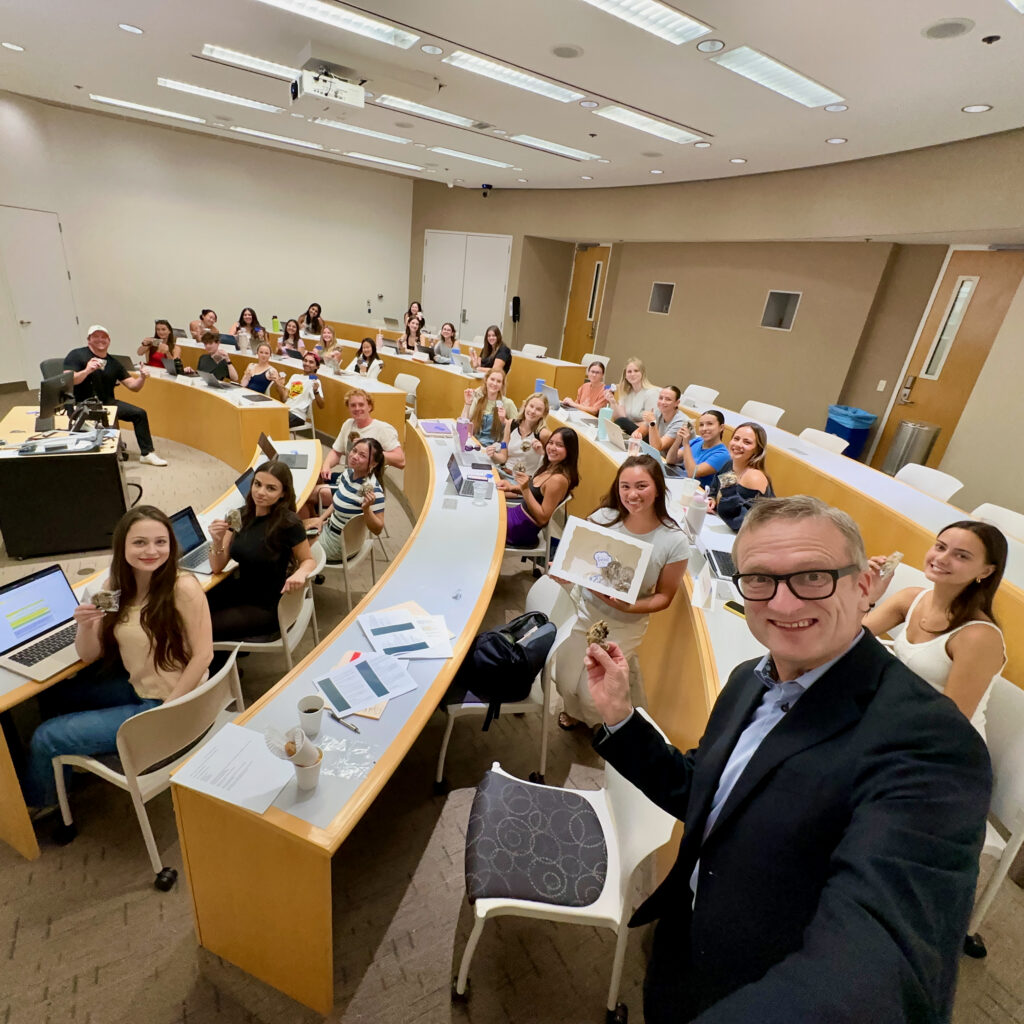
Does your business need help with social media and digital marketing? Right now my students in my Digital & Social Media Marketing classes are selecting businesses or organizations to help in terms of their online presence and need to find an interesting business to help.

Chapman University, Digital Marketing class, Niklas Myhr, The Social Media Professor

We’re looking for opportunities for student teams to work with real businesses or organizations. Non-profit organizations are also encouraged to participate as we wish to reach out more to the broader community. Also, your business or organization can be located anywhere in the world as long as you can collaborate virtually with my students during mutually agreeable time slots.

Your willingness to facilitate a student project is much appreciated as this project will provide the students with a valuable opportunity to learn what it takes to collaborate effectively with team members and deliver results to an external stakeholder. Will that be you?

For priority consideration, please complete the brief survey [NOW CLOSED] below as soon as possible as it will close when we have matched up teams with businesses for this semester. So, if you still see the survey below, it is not too late but don’t delay!

Filed Under: Digital Marketing, Chapman University, Featured2

Netflix Masterclass with Ted Sarandos at Chapman University

December 2, 2022 by Niklas Myhr Leave a Comment

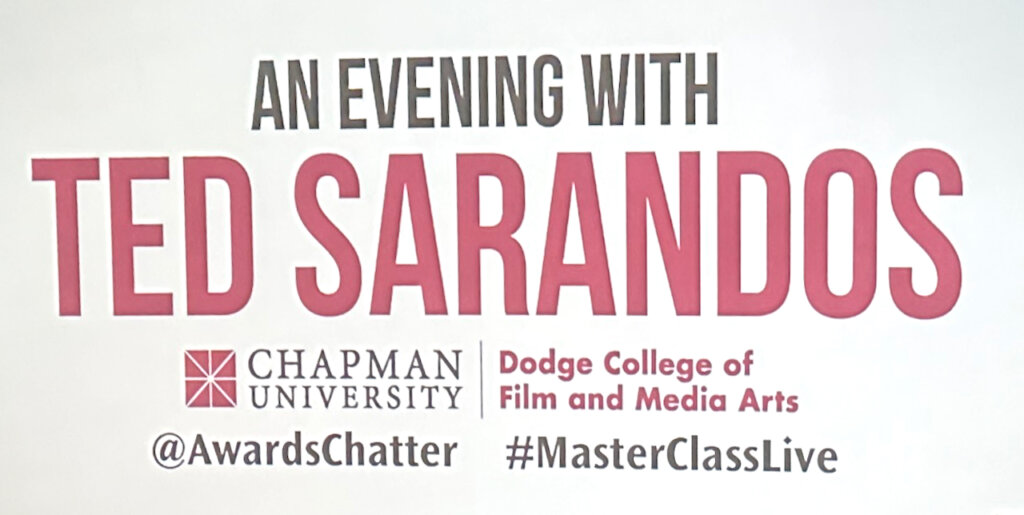
Ted Sarandos, Dodge College of Film & Media Arts, Chapman University
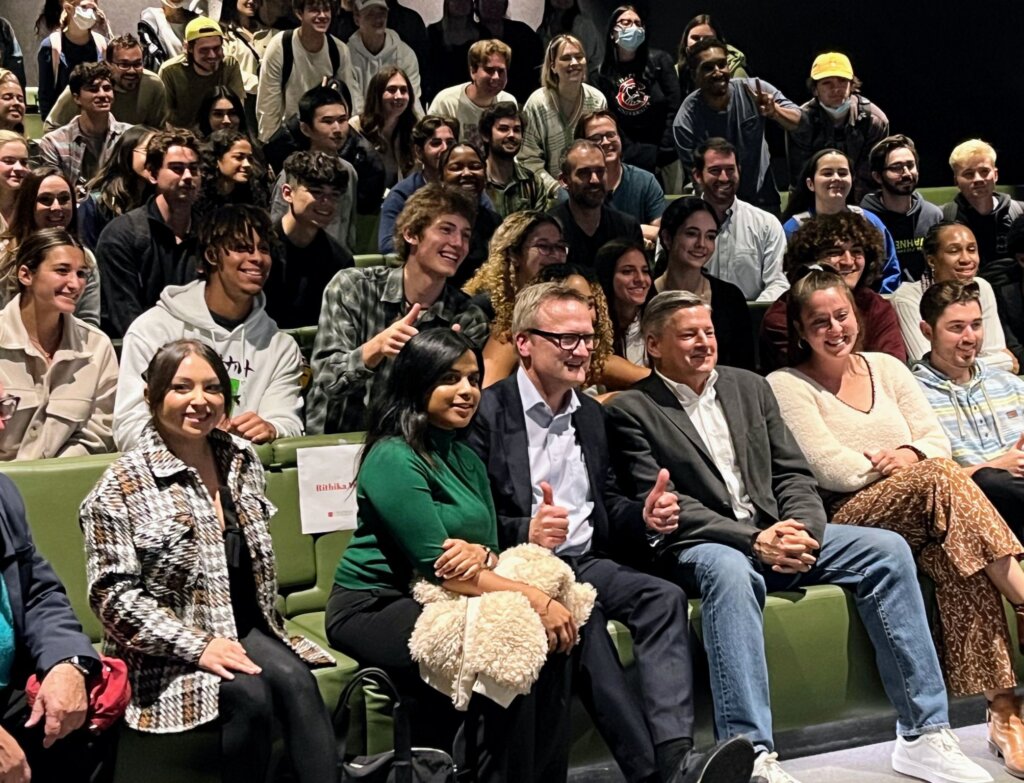
Ted Sarandos at Dodge College of Film & Media Arts at Chapman University (picture credit Henrik Cronqvist)

Chapman students were in for a treat this week with a masterclass by Netflix Co-CEO & Chief Content Officer Ted Sarandos. Mr. Sarandos, also a parent of a Chapman alumni, spoke on his career path and the growth of Netflix to become the dominant provider of streaming entertainment. Ted Sarandos was an early recruit of founder Reed Hastings in year 2000, and as such, he has been a part of the Netflix journey almost from its very beginning (Netflix was founded in 1997).

At Chapman University, Ted Sarandos generously offered reflections, observations, and stories from his rich career with a fully engaged audience. Some of what he shared was “off-the-record” but there were still plenty of nuggets of wisdom some of which I share with you in the following.

Ted Sarandos Learns the Video Rental Business

Ted Sarandos shared how he got a lucky early career break when he was asked to manage an eight-store video rental chain. It was during this time, he learned the ins-and-outs of the business. It was also a dream job for him as he simply loved movies and during slow day-time hours at his stores, he would basically watch every movie that he could get his hands on. It was during this time, he learned the power of recommendations as he could see the value in helping guide customers to just the right movie for them given what they were interested in and what they had liked before.

Netflix vs Blockbuster

The legend has it that Reed Hastings started Netflix after he got a late fee for not returning his Blockbuster movie rental on time. He found it frustrating that he had to go to a store not just to rent a film, but also to return it. Reed Hastings considered testing a concept of mailing VHS video cassettes but deemed them too bulky. Then he looked into the mailing of DVDs and tested the idea by mailing himself a handful of compact discs to see if they came through unscathed. They all came through undamaged.

Meanwhile, Ted Sarandos had transitioned into a sales executive position for the pioneering video-rental wholesaler ETD (East Texas Distribution). One day, ETD’s biggest client Blockbuster, then headed by a former Walmart executive (Bill Fields), decided to stop using wholesalers and buy films directly from the studios instead.

I don’t know much about movies, but I know supply chains. I don’t need you anymore.

Blockbuster’s Bill Fields delivers harsh words to Ted Sarandos

At the time, Blockbuster represented two thirds of ETD’s revenues and Mr. Sarandos made it clear it to our group that it was a pretty crappy day when Blockbuster disrupted the video-rental supply chain. The irony is, of course, that Mr. Sarandos, after quite some insistence by Reed Hastings, eventually would move on and become the Chief Content Officer at Netflix, the company that in turn disrupted Blockbuster. As Netflix further streamlined the video rental distribution business, Blockbuster was hurt as Netflix obviated the need for bricks-and-mortar video rental stores.

Moore’s Law and Streaming vs DVDs

According to Ted Sarandos, Reed Hastings saw very early on that it was inevitable that entertainment ultimately would be streamed via the Internet. However, in the early days, it was still a very costly thing to do and also inconvenient and time-consuming to download movies via slow Internet connections. For the first decade, it simply made much more sense to just ship a DVD-by-mail to effectively deliver all those Gigabytes.

Yet, Mr Hastings had plotted out the expenses of delivering Gigabytes via the Internet vs regular mail and predicted that while the postage rate would increase only nominally, the cost to deliver data online would follow Moore’s Law and be halved every two years. Around year 2000 when Ted Sarandos joined Netflix, Mr Hastings predicted that by year 2011, the postal vs streaming economics would tilt in favor of transitioning over to streaming entertainment.

Niklas Myhr, Ted Sarandos, Chapman University, Dodge College of Film and Media Arts
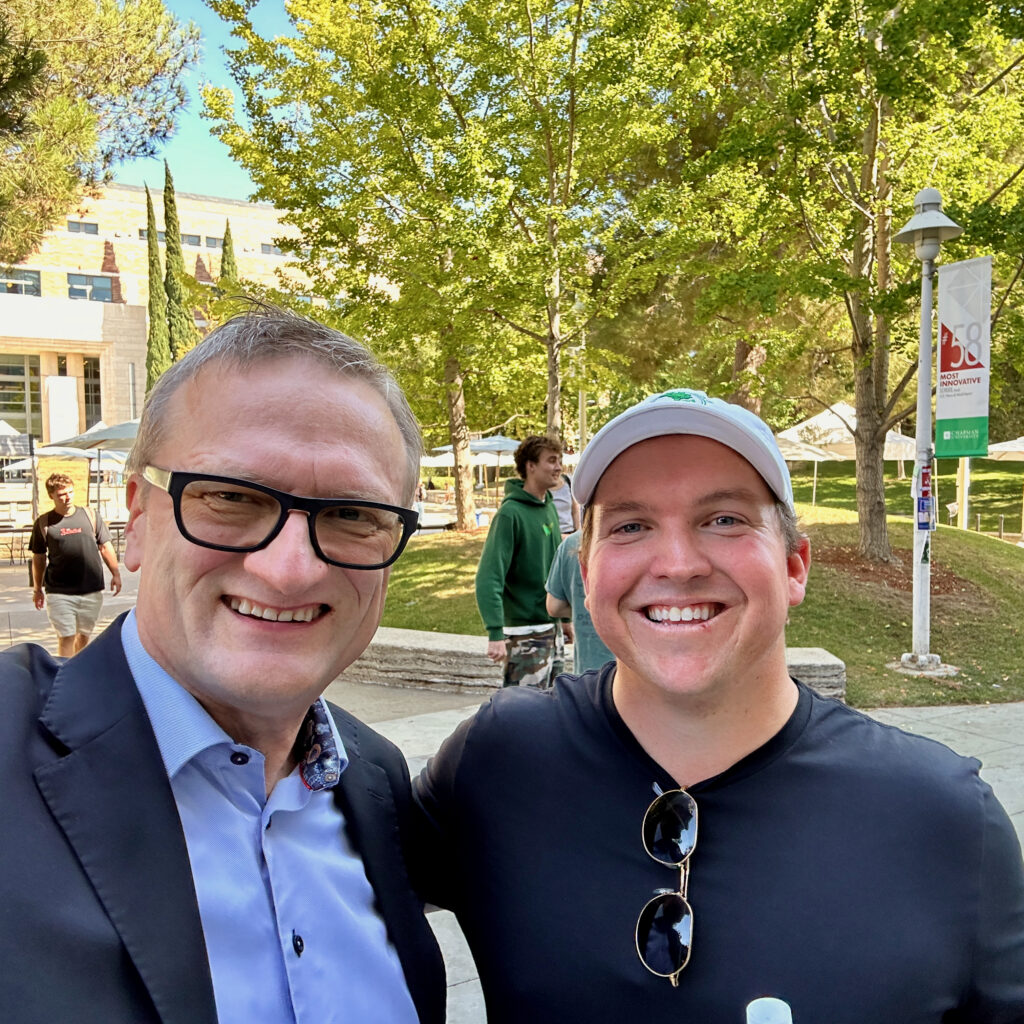
Niklas Myhr and Ted Sarandos at Chapman University

With a smile, Ted confirmed that he knew my friends Yury and Kate. My former colleague Kate Karniouchina taught marketing at the Argyros School and also joined me in 2012 as my faculty companion during our Chapman Argyros MBA/MS travel course Business in Scandinavia. When I met Kate’s husband Yury, he was very busy working at Netflix with its migration from their own data centers to the cloud provided by Amazon Web Services (AWS).

Apparently, it took them a full seven years of hard work to finally be able to shut down the last Netflix data center in 2016 as they had completed the transition to a cloud-native streaming service rebuilt from the ground up. Read more about that project here in case you wonder how Yury Izrailevsky as the Netflix VP of Cloud Computing and Platform Engineering helped build a global entertainment giant so that a quarter billion people worldwide can be entertained without hiccups. Impressive work but at least I beat him in tennis… I also shared with Ted Sarandos how Yury in 2012 asked about the top DVD streaming services in Sweden. Therefore, it was no big surprise to me when Netflix a few months later entered the Nordic countries with an almost immediate impact.

The Quickster Fiasco

In 2011, Netflix found that Reed Hastings had been on the mark and that it was time to invest all their energy into streaming entertainment. At the same time, they decided to separate the film mailing business into its separate brand called Quickster.

Ted Sarandos still holds onto the belief that it was the right move to go all in on streaming at that time as they also predicted that competitors would move in that direction before long. Still, he admitted that the transition had been poorly communicated. They faced a rebellion of upset customers who had developed a close emotional connection to the brand and learned to love the red envelopes being mailed to them. It was simply still a good customer experience that we enjoyed ourselves at home, it was quite a happy feeling to get those red envelopes in the mail! Not saying that I would like to go back to DVD-by-mail but there is something to be said for the delayed gratification and the anticipation that builds up over a few days as a film is on its way to you. And Ted said that the DVD-by-mail service is still available. Anyway, at the time, people really hated the new name of Quickster and it even got mocked on Saturday Night Live.

The Netflix Algorithm and Diversity of Selection

Ted Sarandos also discussed the impressive algorithm Netflix uses to recommend films and shows to watch. Specifically, he suggested that the primary value of the algorithm would be to predict the value people would get out of watching different films from the vast and diverse selection of Netflix.

The algorithm can help diversify our consumption to discover things that we wouldn’t otherwise have found because we are led based on our preferences and previous behavior. Specifically, Ted Sarandos emphasized how valuable and revolutionary the algorithm was in helping people find more narrow films that suits them well, something that was very difficult to achieve in earlier eras.

He reflected on his years growing up in Phoenix, for example, that in spite of being a relatively large city, still would have only one minor movie theatre that would bring in more odd materials such as “best foreign films”. All the others would only show some mainstream “blockbusters” that represented the safer bets by movie studios and for which they would invest their promotional budgets.

In spite of the power of the algorithm, Ted Sarandos didn’t expect that you could go the other way around and use the algorithm to reverse-engineer to develop new successful, creative concepts. In his book, the creative side will remain the domain of creative human beings such as scriptwriters and directors.

Ted Sarandos, Masterclass, Dodge College of Film and Media Arts, Chapman University

HBO Triggers Original Content Move by Netflix’

HBO was another story. Ted Sarandos shared that Netflix tried to license the rights to popular series Six Feet Under from HBO. The price that HBO set was so shockingly high so they started scratching their heads at Netflix. It seemed as if HBO simply didn’t want anyone else to show this series at all as they were so fiercely protective of their exclusive intellectual property.

Netflix started wondering if this was only a precursor of what was to come in licensing materials from others as well. Maybe it was a smart business move to own your content? And maybe Netflix should do the same?

We should have our own original content.

  • Ted Sarandos shares how HBO spurred them in original content direction

The prediction was also that more and more studios would start their own streaming service sooner or later as they would also see that it made more and more economic sense year by year. And without its own original content, HBO may not be the only showstopper. Maybe Disney will do the same. Maybe others will follow.

So with this high price tag by HBO in its offer to Netflix, they didn’t manage to bury Netflix with Six Feet Under. By contrast, that very move seems to have expedited the sense of urgency at Netflix in going all-in on original programming. The move that now is heralded as a key reason behind the stratospheric success of Netflix to make them into the dominant streaming entertainment juggernaut that they are today.

No NFL Football on Netflix

Ted Sarandos addressed the option of live entertainment on Netflix and he pointed out that they have an upcoming live comedy show with Chris Rock. However, it was unlikely that Netflix would move into live sports. The rights to popular live sporting events have simply reached unreasonable heights. The reason for this is that networks bidding for these events consider live sports as a loss leader to have viewers discover their other programming. With 250 million paying subscribers, Netflix doesn’t see the need to invest heavily in awareness creation and discoverability. That’s why you are unlikely to see live NFL football on Netflix anytime soon.

Chapman Minor in The Business of Entertainment

Obviously fantastic for Chapman to have supporters such as Mr. Sarandos which can help create new opportunities down the road. Chapman University is also launching a minor in The Business of Entertainment. This is one manifestation of the increased collaboration with between top-ranked film school Dodge College of Film & Media Arts headed by Dean Stephen Galloway and the Argyros School of Business and Economics with Dean Henrik Cronqvist.

Filed Under: Digital Marketing, Chapman University, Featured2

Elon Musk Flips the Twitter Coin

November 16, 2022 by Niklas Myhr Leave a Comment

Trying to make sense of all that is going on at Twitter under Elon Musk, Abby Little of Chapman University’s The Panther Podcast reached out to me for an interview. Thanks Abby for the conversation in which we discuss Twitter use cases, its business model moving from a reliance on advertising toward subscriptions such as Twitter Blue or Fintech transaction fees, Elon Musk’s innovation process, impersonations and trolling, content moderation, and the future of the platform. Spoiler alert, Elon Musk will either turn out to be the best or the worst thing to ever happen to Twitter!

During the first few weeks under the ownership of Elon Musk, Twitter has been a constant in the news in spite of the midterm elections, war in Ukraine, and other world events. Mr Musk himself continues to communicate via the platform that he so clearly enjoys and in spite of his super-user status, he doesn’t show any intentions of holding back the punches. By contrast, he goes after senators as well as his own employees in a non-apologetic and confrontational manner.

News are also leaking out from frustrated employees who share any email that is sent by Mr Musk as well as audio recordings of what he says at all-hands meetings. Most recently, he has demanded employees commit to working “extremely hardcore” meaning “long hours at high intensity”

At least the continued Twitter journey is unlikely to be uneventful. Also, in spite of all the negative news surrounding the “honeymoon” phase of Musk’s Twitter reign, it would be premature to discount the possibility that he eventually could turn this platform into something quite powerful. Yet, it could also crash and burn and turn into a case study of could-have-beens, should-have-beens. A coin flip indeed.

Again, take a listen to the podcast interview in which I address:

  • Twitter use cases
  • Twitter’s advertising business and alternative business models
  • Elon Musk’s innovation process
  • Impersonations and trolling
  • Twitter Content moderation
  • The layoffs at Twitter
  • The Twitter Blue subscription plan

Filed Under: Digital Marketing, Chapman University, Featured2, Social Media

The Core Premise of BeReal

August 5, 2022 by Niklas Myhr Leave a Comment

The premise of countering the stylized, staged, manicured, perfectionist, big-time influencer post is sustainable, but the idea of taking a photo in a random two-minute time slot could get old.

Niklas Myhr quote on BeReal in Time, August 4, 2022

The explosive growth of emerging social media platform BeReal has naturally caught media’s attention as it tries to understand what the fuzz is all about. In this regard, The Wall Street Journal and Time have reached out to The Social Media Professor for interviews about the essence of BeReal. Our discussions have primarily dealt with three issues:

  • What makes BeReal special?
  • What makes people leave other platforms?
  • Is BeReal here to stay?

What makes BeReal special?

Gen Z (or Generation Z representing the cohort born between 1997 and 2012) is the age demographic that has most enthusiastically adopted BeReal. What seems to attract these young users is that BeReal offers a low-pressure environment where it is okay to share rather mundane pictures of what you are up to at a random time each day, even if nothing exciting is happening in your life at that time.

Creative constraints

BeReal chose to include some constraints in the creation process, which has leveled the playing field between casual users and full-time creators. Creators are limited to sharing only one snapshot a day, using both the front and the back camera to capture more of your surroundings. Also, unless you want your post to be flagged as being “late”, you need to share your photo during a specific and randomly assigned 2-minute period.

Having our Goldendoodle Simona nearby provides for good BeReal postings

With this time constraint, BeReal effectively reduces the time creators have at their disposal to set up, take, and share a photo. Users can also not simply upload old photos from their phone as this would defeat the purpose of BeReal which is to capture what is going on at a very specific time.

Other limitations include the lack of editing options, so creators cannot work on filters to create the “perfect” image. This lack of filtering options harkens back to 2013, when the #nofilter hashtag started trending on Instagram as a reaction to the overuse of filters. Even if filters are still available on Instagram, this was perhaps a precursor of apps like BeReal, which speaks to the preference of many users who find it refreshing to share and see pictures in their raw, authentic, and original forms.

Forced participation

One noteworthy aspect of BeReal is that it forces you to share an update yourself before you can see anything of what is going on with others. This ensures that everyone on the platform participates in contrast to other platforms on which many users have become passive observers of what others share.

What makes people leave other platforms?

Is the growth of BeReal connected to the growing dissatisfaction users report on other platforms such as Meta’s Facebook and Instagram? Instagram, in particular, has been in the spotlight recently as they have introduced changes to mimic the increasingly dominant TikTok, such as by featuring more video content via so-called Reels and by introducing recommended content by people you are not connected with.

While the simultaneous growth of BeReal could be coincidental, the timing is curious and speaks in favor of this being the perfect storm when a platform like BeReal becomes a refreshing alternative where users, at least for a moment, can stay connected with their friends in a more authentic manner.

Attacking some trees at the summer cabin

Even before the TikTok-inspired changes with Reels, Instagram was beginning to face issues of content feeds being overly saturated with content by professional influencers and ads. Many regular users have become more hesitant to share updates of themselves, self-disqualifying their lives and photos as not sufficiently interesting or good-looking.

As more users become passive lurkers rather than active participants, the user experience on Instagram has become more similar to watching Netflix on your sofa. And by watching an Instagram feed where others present picture-perfect lives, the experience has not always been a happy one. For example, even Instagram’s own research show that female teen depression on Instagram is real.

Still, it is essential to remember that people flocking to BeReal for a few minutes each day doesn’t necessarily mean they abandon other stalwarts in the business as my Gen Z daughter Selma pointed out. Rather, at least for the time being, BeReal represents a complement to existing offerings rather than as a replacement.

Is BeReal here to stay?

On the island of Utö in the Stockholm Archipelago

The Business Model of BeReal

What business model can make BeReal sustainable from a business perspective? With increasing investments in the platform, that question will likely become more acute as months go by. Still, the most viable options for monetization are not likely to be implemented in the near future:

  • Allowing for advertisements would be risky as many users likely fled to BeReal as other platforms had too many ads whereas BeReal represents a more genuine, authentic experience. That being said, if BeReal would go for advertisements, the best approach would be for them to curate or steer advertising partners toward ads doubling down on “realness”. Less-than-perfect photos and illustrations of a behind-the-scenes nature can show people that companies are human too. Some brands have already begun experimenting with an organic presence on BeReal in the hopes that the authenticity shines through. Yet, this avenue is not necessarily novel as many brands have now done similar work for years trying to be authentic such as via Instagram Stories.
  • Charging a subscription fee doesn’t sound realistic at this point as the feature set is too limited. Perhaps a subscription for power users could be on the horizon, but the idea of big-time influencers on the platform runs counter to the essence of what BeReal is all about.
  • Merchandising could be an option through which BeReal could capitalize on at least some of the traction it currently has, even if the risk is that users feel that BeReal would be selling out if they were to start selling t-shirts on being real.
  • Diversification is yet another option where BeReal could serve as a marketing vehicle to promote other products and services. The risk here would be if these offerings would be presented in such a way that these would become just as intrusive to the user experience as ads by other companies. But while they have the momentum, BeReal certainly has the opportunity to try a number of things. For example, I would not be surprised if they managed to host events, conferences, or meetups of “real people” around the world. Or they could host a concert with “real artists” performing unplugged in regular clothing with no makeup. Lady Gaga appearing as Real Gaga, wouldn’t that be a thing?
  • Looking for mergers & acquisitions is another possibility, as partnering up with someone else or allowing yourself to be acquired could provide the desired combination of the ability to attract an audience with commercialization options. Perhaps Airbnb sees the potential fit of having BeReal help them further enhance its already impressive online community of “real people”?

Is BeReal a fad?

Regardless of the business model implications, another issue is whether BeReal is a fad or a platform that can sustain its momentum and continue its growth for the foreseeable future.

Though the number of downloads is a good measure of an app’s success, that data doesn’t predict whether the app has staying power

Niklas Myhr quoted in The Wall Street Journal, April 20, 2022

Whether authenticity online is attainable at scale or even desirable is debatable as other platforms such as Facebook and Instagram have struggled in this regard. A decade ago, you would be hard-pressed to see a single presentation on social media not emphasizing the importance of being “authentic” (and yes, this includes presentations by the author of this article…).

Sharing the view from Chapman University’s Faculty Atheneaum

Yet, the core premise of BeReal is that it is supposed to capture people’s everyday lives in a more realistic, authentic manner. However, that doesn’t necessarily have to be implemented via random, 2-minute windows during which you snap a photo. The novelty of this particular approach is likely to wear off sooner rather than later.

Still, there are other ways in which BeReal can capture the realness of people’s lives. After all, it is not called RealPhotos, so obvious extensions to the current model would be to invite people to share real video, audio, or text snippets based on specific prompts. All would serve the purpose of getting the bulk of people sharing what they are up to right now.

Having experimented with BeReal myself, I can identify with the joy of getting that BeReal notification just at the time when you were up to something unusual or fun in some other way. Or, at least I have often been able to find our dog Simona as a go-to participant in my BeReals!

Still, BeReal is supposed to provide a more realistic view of someone’s life in that it captures your average moment rather than just the highlight of your day. One can only hope that apps like BeReal can inspire youth to lead more interesting lives in that it gets them outdoors, socializing with other people, finding scenic viewpoints, and engaging in more exciting activities.

Or, perhaps even better, apps like BeReal can make people feel better about themselves as they see that others are not always having the best times of their lives on an everyday basis. Nor are they looking fabulous every day. In this regard, BeReal deserves credit if the platform can serve as an important reminder that you don’t necessarily have to look perfect every day. Instead, you can simply be yourself and that is fine enough.

My rock star brother David Myhr trying to look like a regular guy

But given that BeReal is beginning to spread to older age brackets, the risk is that many users will find themselves at the very same spot such as at a desk at work during most of the BeReal’s random notification times. Pictures over time may become very similar to yesterday’s post.

It could also be less than ideal to get a 2-minute countdown notification during inopportune times while you drive, sit in class, or are busy at work. Myself, I had the notification alert go off while proctoring my students’ final exam. It quickly became obvious that many of my students recognized BeReal’s distinctive notification sound as they smiled at me.

Filed Under: Digital Marketing, Featured2, Social Media

Quoted in The Wall Street Journal on Twitter’s Edit Button

April 7, 2022 by Niklas Myhr Leave a Comment

Twitter certainly got some attention this week after it became known that Elon Musk with a 9.2% stake now is the platform’s largest shareholder. He also launched a Twitter Poll asking whether an edit button should be made available on Twitter just like on other platforms such as Facebook, Instagram, and LinkedIn. The proponents of an edit button won out with an overwhelming 75% to 25% margin and Twitter quickly made it clear both that the idea wasn’t new, far from it, but also that they are in the development of a edit button for subscribers of Twitter’s Blue plan.

In the early days of Twitter, it made sense that Twitter didn’t allow for an edit button given that tweets for most were seen as rather ephemeral in nature as they were fleeting by as short snippets in their never-ending timelines. Technically, the tweets would still be up on the profiles of users if you sought them out but the thinking was that if they needed to edit short statements, they might as well delete it and post a new tweet.

Today, a stronger case can be made for an edit button. First, tweets can now be longer, 280 vs 140 characters previously, and many users also post longer stories by replying to their own tweets so users and get a series of statements from you in one fell swoop by browsing through a thread of tweets. Second, the algorithmic feed used today means that some tweets will surface at the top of your feed as you log in regardless of whether it was the most recent tweet or not.

The algorithmic rankings are at least partially based on the engagement that a tweet gets. Therefore, users who have gained a lot of attention, retweets, and interesting comments on a tweet are reluctant to delete the whole shebang for only a minor edit. The concern that likely has held Twitter back from the addition of an edit button is that some people may fundamentally change the nature of the message contained in a tweet and this is the aspect that Dalvin Brown of The Wall Street Journal highlighted with my quote:

Quote in The Wall Street Journal, April 7, 2022

As the article points out, that concern has at least partially been addressed by platforms such as Facebook by including a label on a tweet making it clear that it has been edited. Facebook has faced related challenges in the past such as when a Facebook Group gathered thousands of members say for a noble charitable cause as people could wake up the next day only to learn that they now were members of a controversial hate group after a group administrator changed the name of the group. Same thing with Facebook Events. Now, you are able to make tweaks to an event you create but primarily in the early stages before you get too much traction.

Regardless of your take on the edit button, all the attention on Twitter seems to have had an immediate positive impact not only on the stock price but also on the publics interest in actually using the platform more. I think I will give it another shot to be more active there. Perhaps I’ll even try to get my Chapman University students excited about Twitter and see if magic happens, so see you there where I can be found at @NiklasMyhr!

Filed Under: Digital Marketing, Featured2

My TEDx Talk on The Modern Specialist

January 5, 2017 by Niklas Myhr Leave a Comment

Define yourself in terms of who you serve, not in terms of what you do.

I am very pleased to announce that my TEDx Talk on the role of the Modern Specialist has been published. In this talk, I share some perspectives that at times run counter to some popularly held beliefs on how to set yourself up for career success such as focusing on one thing and become really good at that. While I can see the potential benefits of such an approach, the question is what you do if you don’t know what to focus on, what your passion is, or if there is no demand for your services? Those are some of the concerns that I address and I also present an alternative perspective that I at times advice my students to embrace, the one of “The Modern Specialist.” This perspective is partially developed as a result of my summer internship in New York with Gary Vaynerchuk at Vayner Media and my talk also builds on my previous TEDx Talk at TEDxUmea.

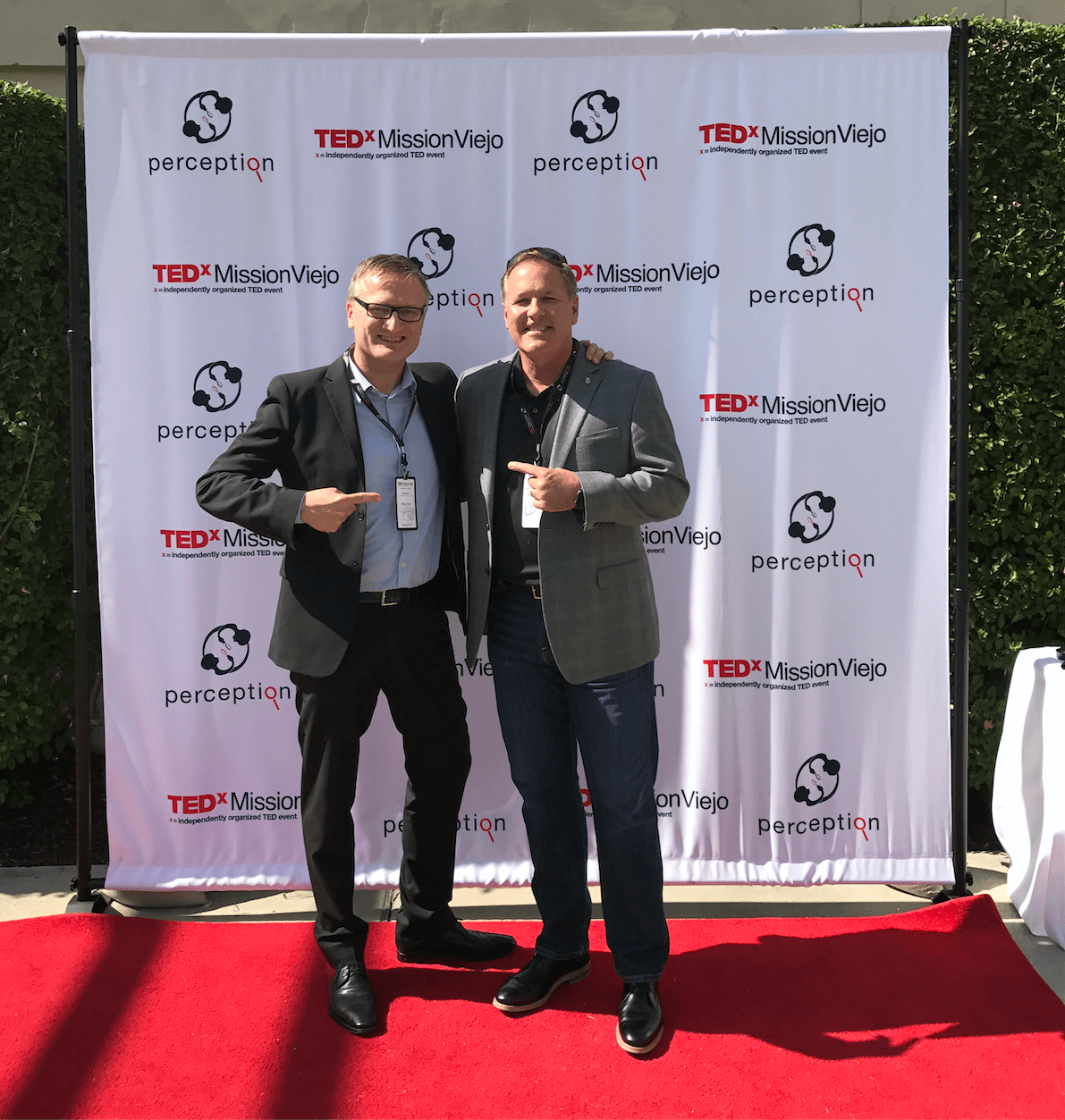
This talk was recorded during a very special day at TEDxMissionViejo superbly managed by Stephanie Paul and where I got to engage with a very dynamic group of people composed of other speakers, audience members, and volunteers. I was proud to share the stage with my social entrepreneur student John Cefalu who spoke on making an impact in Africa and was also very pleased to see my Chapman University students volunteering and helping make the event run very smoothly to make it a tremendous experience for the audience and everyone involved! Special mentions go out to Venice Gell, Laurisa Sanchez, and Taylor Myers and the whole TedXMissionViejo Team and to Noel Witcosky and Annika Streng for helping me with research.

TEDxMissionViejo Volunteers

Mitch Jackson honored me by attending Lawyer and Social Media Expert Mitch Jackson honored me by attending.

TEDxMissionViejoMakeup
Getting ready, makeup time!

TEDxMissionViejo Niklas Myhr
Shot captured by my intern Annika Streng!

Filed Under: Chapman University, Featured2, Personal Branding, Speaking

Featured Posts

AP Called Me on $4 Million College Football NIL Deal

The Associated Press called asking for my take on a college lineman Jordan Seaton at LSU (Louisiana State University) reportedly earning $4 million a year from a pharmacy chain, a … [More...]

BBC News Interview: Australia’s Teen Social Media Ban

Australia’s teen social media ban gave me a chance to discuss, live on BBC News directly from my Chapman University office, why an all‑out prohibition on platforms for young people … [More...]

Robb Fahrion speaking at Chapman University, Influencer & Social Media Marketing class, Niklas Myhr, The Social Media Professor

6 Influencer Marketing Lessons from Real Life

Pleased to have Chapman Class of 2011 alumni Robb Fahrion, Co-Founder & CEO of Flying V Group, visit both my classes at the Argyros College of Business and Economics on … [More...]

Newsletter

The Social Media Professor

Orange County, California
United States

Also at NiklasMyhr.com

Contact

Please email me at niklas [at] thesocialmediaprofessor.com if you have any questions.

Copyright © 2026 · Agency Pro on Genesis Framework · WordPress · Log in