The Social Media Professor

  • Home
  • About The Social Media Professor
  • Speaking
  • Blog
  • Contact

Chapman Social Media Aid

February 4, 2026 by Niklas Myhr 5 Comments


*** Thanks for all the submissions, our Call for Projects now closed as all student teams have picked projects to work with. Even if your organization didn't get picked this time, please rest assured your kind offer of a project opportunity is warmly appreciated. Please be on the lookout here in early September if you wish to try again in the Fall, thanks again for your support! ***

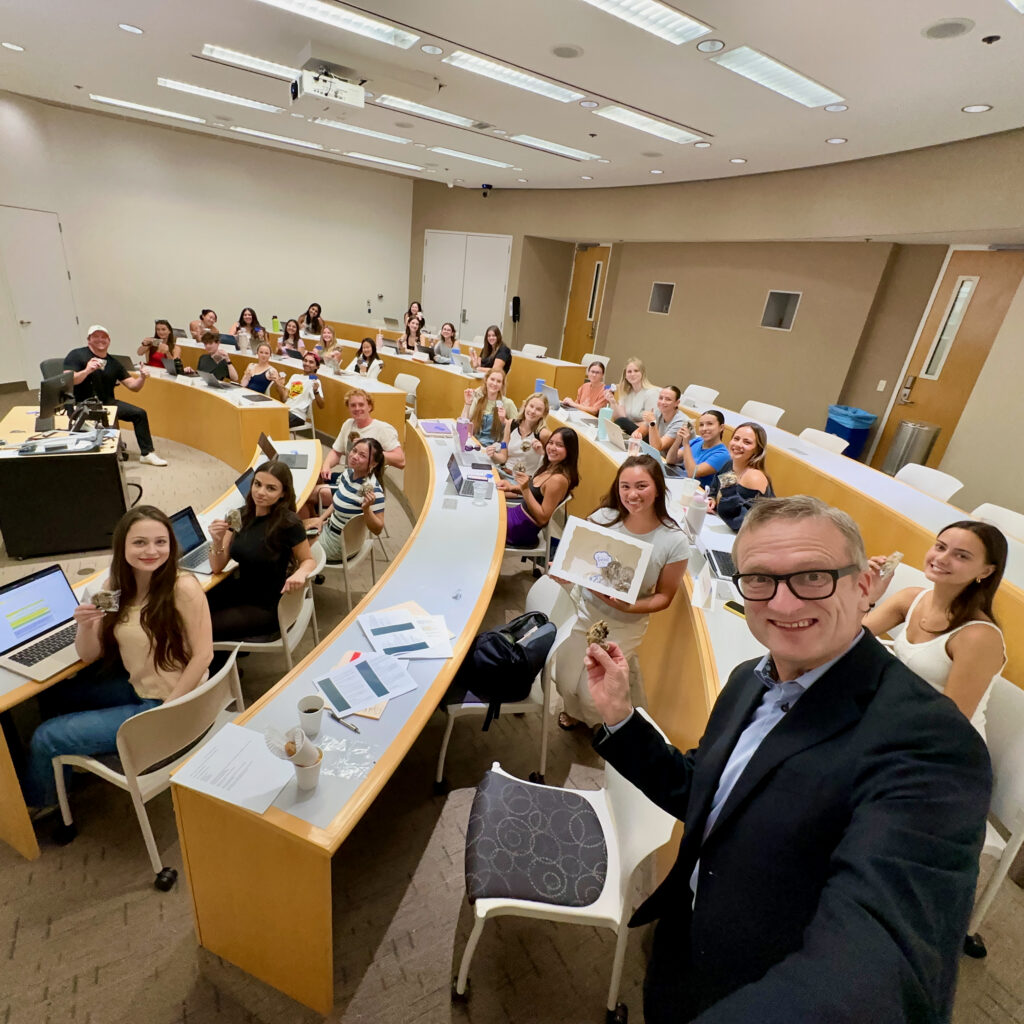
Does your business need help with social media and digital marketing? Right now my students in my Digital & Social Media Marketing classes are selecting businesses or organizations to help in terms of their online presence and need to find an interesting business to help.

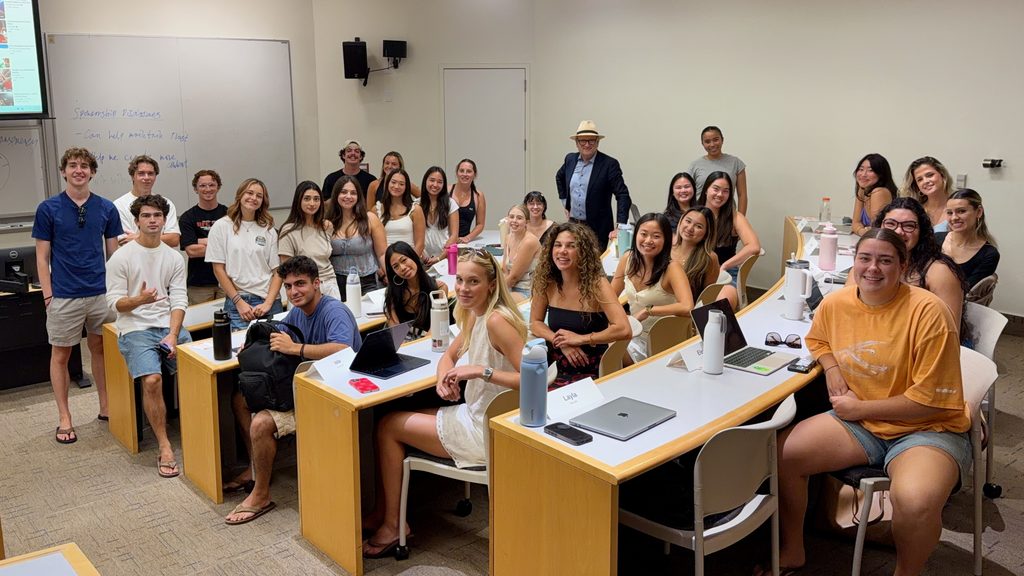
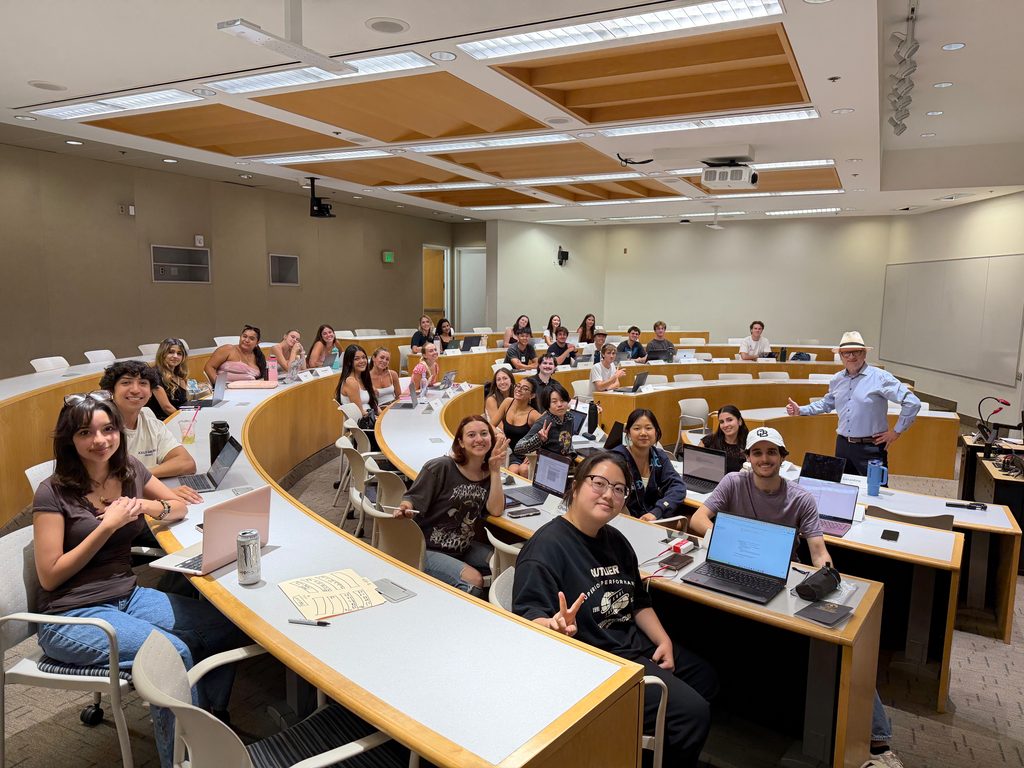
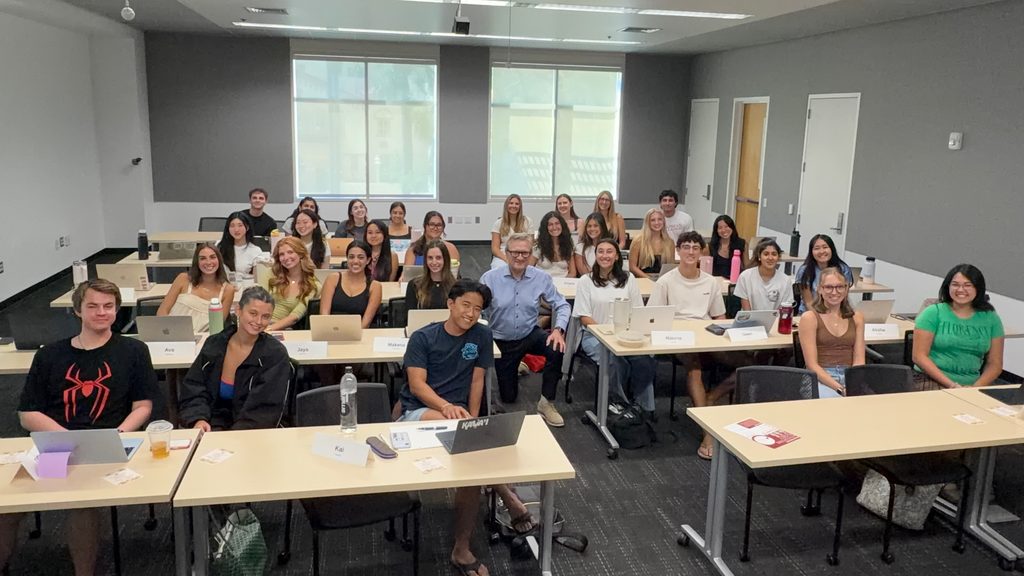
Chapman University, Digital Marketing class, Niklas Myhr, The Social Media Professor

We're looking for opportunities for student teams to work with real businesses or organizations. Non-profit organizations are also encouraged to participate as we wish to reach out more to the broader community. Also, your business or organization can be located anywhere in the world as long as you can collaborate virtually with my students during mutually agreeable time slots.

Your willingness to facilitate a student project is much appreciated as this project will provide the students with a valuable opportunity to learn what it takes to collaborate effectively with team members and deliver results to an external stakeholder. Will that be you?

For priority consideration, please complete the brief survey [NOW CLOSED] below as soon as possible as it will close when we have matched up teams with businesses for this semester. So, if you still see the survey below, it is not too late but don't delay!

Filed Under: Digital Marketing, Chapman University, Featured

BBC News Interview: Australia’s Teen Social Media Ban

December 11, 2025 by Niklas Myhr 2 Comments

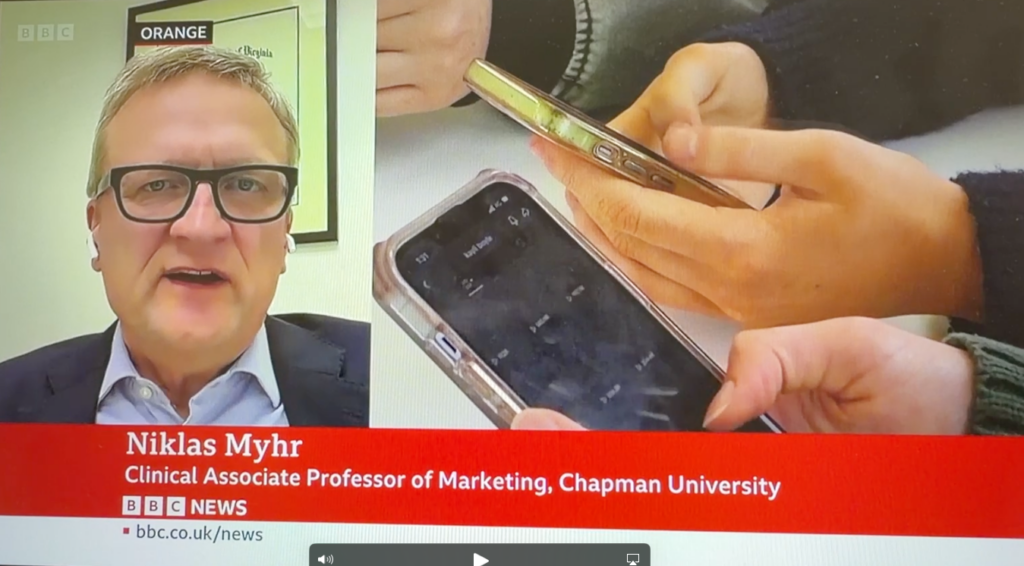
BBC News social media ban interview Niklas Myhr

Australia’s teen social media ban gave me a chance to discuss, live on BBC News directly from my Chapman University office, why an all‑out prohibition on platforms for young people is unlikely to deliver the safety politicians are promising. In this post, I want to unpack the key points from that interview and explain why better enforcement, smarter design, and empowered parents beat blanket bans.

“I don’t think this is the right way to go about it”

When asked whether an all‑out ban could protect people online, my first reaction was clear: “I don’t think so… I don’t think this is the right way to go about it.” The intention may be “a laudable initiative in terms of doing something” about harms, but the execution raises serious problems.

One major issue is practicality: a nationwide age‑based ban “is going to be difficult to enforce,” especially when tech‑savvy teens are already accustomed to circumventing weaker age checks. If the rules only work on paper while young people quietly route around them, the policy risks becoming a symbolic gesture rather than a meaningful protection.​

From regulated platforms to “worse places”

Another concern I raised is that some young people “may end up in worse places than highly regulated, potentially highly regulated tech platforms.” Mainstream social networks are far from perfect, but they at least have some degree of moderation, reporting tools, and public scrutiny.​

If those options are shut down, the unintended consequence could be a migration to “different fringe websites that become new destinations for teens.” In other words, by closing the front door of big platforms, we may be nudging vulnerable users into back alleys of the internet where predators, extremist content, and zero oversight are more common.

BBC News story on Australia's Teen Social Media Ban, interview with Niklas Myhr, Chapman University

Content moderation as a “balancing act”

In the interview, we also talked about how Europe, the United States, and now Australia are taking different paths on regulation and free speech. I emphasized that “content moderation has always been a balancing act.”

Platforms “have a responsibility to do some reasonable effort” to go after “bad content, systematic violators, [and] predators, and actually take them off the platform.” Europe is increasingly saying tech companies are “not doing enough, not nearly enough,” while the US remains less strict for now, in part due to free‑speech concerns. Australia’s move adds yet another model to this global tug‑of‑war over how far governments should go in dictating what happens on social platforms.​

Why “teen accounts” and parental controls are not enough

The BBC host asked about Instagram’s heavily promoted “teen account,” with built‑in controls meant to keep younger users safer. My view is that this type of solution “probably requires parental control and supervision in order for it to work with today’s verification standards.”

Many teens will still “find ways to get access to the adult version anyway,” which limits the impact of these features. For platforms, however, such tools are convenient proof to regulators that “at least we’re doing something,” even if “that I don’t think is nearly enough.” Without robust age verification, better design defaults, and real collaboration with parents and educators, teen modes risk becoming more of a compliance checkbox than a real safeguard.

Social media as “the community center” and “the playground”

One part of the segment focused on angry young influencers in Australia who feel the ban is taking away both their social life and a potential income stream. When asked how important tools like TikTok are for today’s youth, I described social media as “the community center” and “the playground” for better or worse.

Even as “The Social Media Professor,” I said that I “clearly want people [teens] to go out and play and have fun and socialize” offline. Still, “not all online activity is bad, and not all screen time is a‑social”; many teens “have true relationships and communities” online. Removing them wholesale from these spaces ignores the reality that meaningful friendships, support networks, and creative collaborations now routinely start on screens.

Speech, politics, and building movements

Beyond friendship and fun, young people also “use this for speech and political lobbying and building movements and communities.” If bans like Australia’s become a template “in other countries as well,” youth may “have less ability to do” this type of civic engagement.

At a time when social and political debates are increasingly mediated by digital platforms, excluding under‑16s from the conversation carries consequences for how represented they feel in public life. The ban is not just a safety measure; it is also a restriction on how a generation participates in culture, activism, and democratic discourse.

Influencers, parasocial relationships, and making a living

The BBC piece also highlighted teen influencers whose ability to earn money is directly affected. I noted that “influencers is a real thing, whether you like it or not. Influencer marketing is here to stay.” For many young creators, social media is where they develop followings based on trust and parasocial relationships.

Some of these creators “are very young indeed,” building audiences and skills long before traditional employers would consider them. A hard cutoff at 16 does not just protect them from potential exploitation; it also shuts down early career experimentation, entrepreneurial learning, and legitimate income streams that families in some cases rely on.

Where this leaves regulators, parents, and platforms

Taken together, the arguments from the interview point toward a more nuanced path than an outright ban. Policymakers should focus on enforceable obligations for platforms to act against clear harms and repeat offenders, rather than pushing all under‑16s off mainstream services. Parents need better tools, transparency, and practical education, not just legal reassurances that teens are “not on social media anymore.”

For platforms, the message is that cosmetic changes will not suffice. They must take seriously their responsibility to design with youth in mind, to support healthier defaults, and to collaborate with regulators on standards that go beyond PR‑friendly “teen accounts.” Social media can be both dangerous and deeply valuable; treating it as today’s “community center” and “playground” is a better starting point than pretending we can simply lock the gates and throw away the key.

Filed Under: Social Media, Featured

6 Influencer Marketing Lessons from Real Life

September 24, 2025 by Niklas Myhr 1 Comment

Pleased to have Chapman Class of 2011 alumni Robb Fahrion, Co-Founder & CEO of Flying V Group, visit both my classes at the Argyros College of Business and Economics on Influencer & Social Media Marketing about the realities of digital growth—where authentic relationships, data-driven influencer strategy, and the courage to innovate matter more than hype. Genuine influence creates measurable business impact!

Robb Fahrion on far left speaking at Chapman University, Influencer & Social Media Marketing class, Niklas Myhr, The Social Media Professor
Robb Fahrion speaking in my Chapman University class on Influencer & Social Media Marketing while delicious cookies were served by Amanda of @keepitsweet.ad

Robb shared honest lessons from his journey of building Flying V Group from scratch in 2016, moving from building websites and running social media for clients to scaling a full-service digital agency increasingly taking ownership stakes in brands they help grow, and explored what truly drives effective influencer collaborations in today’s market.

6 Influencer Marketing Lessons:

  • Authenticity Over Hype: Robb cautioned against blindly chasing influencers with large followings, noting the critical need to know “who are their actual audiences?” and to focus more on genuine local and grassroots influencers, whose engagement is real and verifiable. Ideally, these influencer relationships are developed with personal outreach by building direct relationships with mid-tier and micro-influencers, based on trust and relevance to the brand.
  • ROI-Driven Influencer Marketing: He urged that influencer campaigns must be evaluated by rigorous, business-focused metrics—just as with any other marketing investment. The biggest influencer is not always the best investment, and brands need systems to track whether influencer partnerships move the business needle or not.
  • Organic Motivation and the Power of Gifting: Robb shared real examples of successful influencer collaborations that involved sending high-value, creative gift boxes with hand-written notes, without upfront payment or explicit demands. This organic outreach resulted in strong social sharing, higher trust, and better ROI compared to typical paid influencer posts.
  • Integrated, Omnichannel Thinking: He emphasized that influencer activity alone is not a silver bullet. Brands must link influencer posts to proper digital ecosystems—trackable links, retargeting, and continued engagement—so initial exposure converts to lasting business impact.
  • Experimentation before scaling: AI and new platforms will constantly change what works, but fundamentals of marketing persist. Robb highlighted how generative AI and automation make it possible to create, test, and validate content ideas for both ads and influencer materials rapidly and affordably, letting brands experiment more and scale only after they have established what actually works without heavy upfront content expenses.
  • Control What You Own: Robb underscored that websites and email lists are real, long-term business assets, whereas social channels and influencer audiences are rented, ephemeral assets. Strategic investments should focus on building owned platforms, using influencers as one input—not a replacement—for durable brand growth.

Thanks Robb for the visit, looking forward to following your continued journey in the marketing world and beyond! And keep up your habit of hiring some of our fabulous students!

Filed Under: Chapman University, Featured, Influencer & Creator Marketing

Quoted in Reuters story on Threads

July 6, 2023 by Niklas Myhr Leave a Comment

Meta with its Instagram service is going after Twitter with its new text-based social media platform Threads to become the new digital town square for text-based conversations, live commentary, and breaking news. I shared some perspectives with Reuters that they featured in a story today.

Threads vs Twitter

The timing of Meta’s release of Threads could not have been better as Twitter is at its most vulnerable stage. With its bare-bones staff, Twitter is apparently barely able to keep the service running let alone manage increasing brand safety concerns with its reduced investment in content moderation.

There is a rather large graveyard filled with failed social media platforms. However, Threads, building upon the Instagram platform with its massive user base, is at the very least going to get a serious look by many who have gotten increasingly frustrated with Twitter’s increasing toxicity and overall turbulence of late since its takeover by Elon Musk.

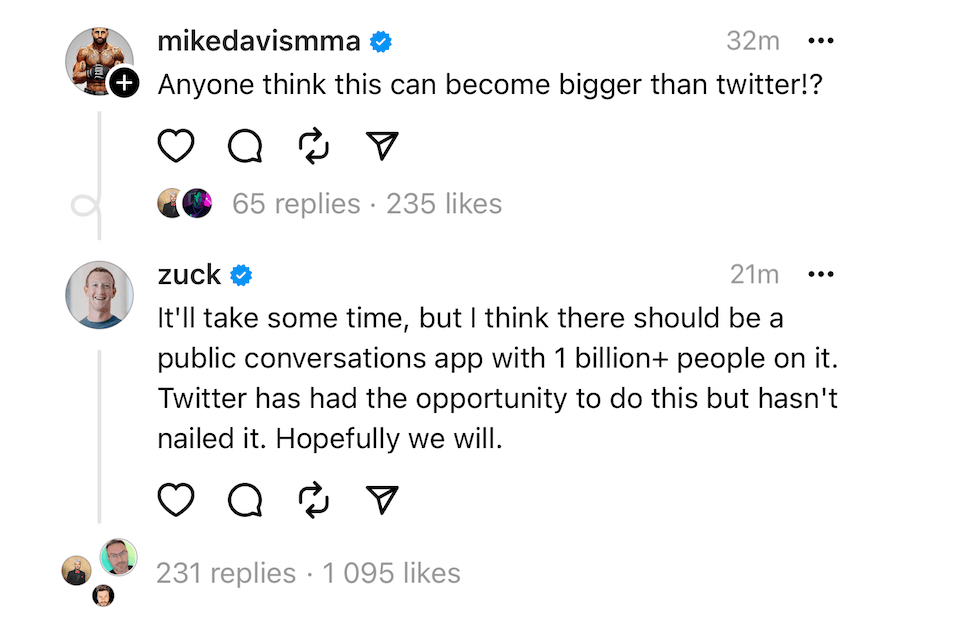
That Twitter is the platform that is specifically targeted by Threads is something Mark Zuckerberg is making abundantly clear. He hopes that Threads by Instagram will be the first billion-user conversation platform and suggests that Twitter had its shot and basically blew it.

Why Meta May Succeed with Threads by Instagram

Meta has proven that they can successfully integrate killer features of emerging platforms such as Snapchat and TikTok such as in the case of Instagram’s Stories or Reels formats. Moreover, Meta has the financial muscles to be sufficiently patient to give Threads a chance beyond the honeymoon phase of a launch. Over time, Meta can tweak and improve the Threads platform as it learns from the behaviors of the early adopters.

Threads is off to an impressive start with 10 million users in only the first 7 hours. That Threads can build some initial momentum is not so surprising given that it is rather friction-less to sign up via your existing Instagram profile. Thereby, you can simply use the same user handle and login while leveraging the following you have already built on Instagram. You can simply state that you wish to follow everyone you already follow on Instagram and if they are not yet on Threads, you will start following them the moment they do sign up.

5 Reasons Advertisers will go for Threads

Advertisers are likely to monitor the emergence of Threads with great interest for at least five reasons:

  1. Instagram is a proven platform and is the service from which Threads is launched.
  2. Advertising rates can be attractive initially. Historically, advertising rates on emerging platforms can be had at bargain prices until mainstream marketers realize the true value of a new platform and join the fray.
  3. Opportunity to connect with early adopters. By being an early advertiser on a platform, brands have an opportunity to establish themselves and connect in more genuine ways with early adopters before the platform becomes overly commercialized. Based on my observations day 1, many of these early adopters are also quite influential people with large communities.
  4. Relevancy for Gen Z’ers. Being early on the platform could also be a way for a brand to demonstrate its overall relevancy with younger demographics such as Generation Z as the young tend to be the first to give new platforms a chance.
  5. Brand risks on Twitter. When it comes to brand risk, brands would typically look at a new platform with some trepidation. However, given the increasing concerns about brand safety over on Twitter with its more bare-bones content moderation standards, Threads could be seen as a safer option already from the get go.

5 Challenges for Threads by Instagram

For Threads to become a true public square of conversations, they will clearly face some significant challenges and success is far from guaranteed. In the following, I list some of the key challenges Threads will need to deal with:

  1. Getting users to go public. One key will be for the platform to motivate a large number of users to opt for the public vs private option when joining Threads. Otherwise, it simply won’t become the “public square”. Clearly, there could be value in more closed communities and amongst circles of friends but such needs are likely already met by existing services.
  2. Establishing a climate for civil discourse Another challenge will be for Threads to foster a climate and a platform for civil discourse about topics people would like to discuss while at the same time, not going overboard with content moderation.
  3. Alleviating privacy concerns. Will Threads be the platform where people feel that they can truly open up and share their thinking or will they hold back given that Meta has a history of exploiting what they know about you?
  4. Complying with anti-trust legislation. For me, it was quite noticeable that something was during missing day 1 of Threads. Simply put, where were all my Swedish friends and connections many of whom typically would show up early on new platforms? Then I learned that Meta chose to wait with the launch in all of EU, presumably as they want to be in compliance with the Digital Markets Act and the Digital Services Act and it is clear that EU’s increasingly aggressive stance on Big Tech has resulted in some hesitation. Personally, I hope that they figure it out so I can connect with my European friends soon!
  5. Ensuring interoperability with other networks. Some of the emerging and decentralized Twitter alternatives like Mastodon and Bluesky are likely to still stay around for the foreseeable future given that they seem to have struck a chord with many former Twitter enthusiasts. The question is if Threads can win out with its ease of use and frictionless onboarding or at the very least succeed by ensuring that the network complies with some interoperability standards. At least, Threads is hinting at this as an objective as they aim to make future versions of Threads compatible with the so-called fediverse via which you can follow and interact with people across platforms even specifically mentioning Mastodon by name.

Social Media Coming Full Circle with Threads by Instagram

Threads, by going for text as the primary media format, seems to be an example of social media coming full circle from its origins of text-based updates. Then, when Facebook allowed for images to be shared, they were seen as illustrations of an accompanying text whereas Instagram was more image-centric with a text caption as an add-on. Later, with video taking off on all platforms and social audio becoming a thing, text started taking a back seat on social media.

The written word is still powerful, though, as evidenced by the growth of email newsletters and messaging platforms. Certainly, Gen Z’ers are no strangers to texting albeit often behind closed doors inside private chat groups with their friends and communities on Instagram, Whatsapp, Messenger, etc. Threads is apparently not going for private messaging and dms are not even possible, at least not in the first iteration of the service.

Why I am on Threads Day 1

I get it that not everyone would be excited about the launch of yet another social media platform and I respect those who feel that the world needs less, not more social media… On the other hand, others get excited by the emergence of promising new platforms and are eager to jump on board and try them out. I belong to the latter category, at least some of the time.

My goal with experimenting with new social media platforms is not necessarily to find ways to add more social media to my life but rather to find out if a new alternative can be a better alternative than and reduce the need for some existing platforms. I will withhold my judgment of the platform as it is still Day 1.

Still, the rollout too 100+ countries seems to be running well so far and it has been enjoyable to interact with many familiar faces during this first day of the platform. It is as my friend Mitch Jackson usually tells my students when he visits my Chapman University classes “Platforms come and go but relationships can last a lifetime.”

In conclusion, hope to connect with you over on Threads, you can find me at https://www.threads.net/@niklasmyhr

Filed Under: Digital Marketing, Featured, Social Media

Netflix Masterclass with Ted Sarandos at Chapman University

December 2, 2022 by Niklas Myhr Leave a Comment

Ted Sarandos, Dodge College of Film & Media Arts, Chapman University
Ted Sarandos at Dodge College of Film & Media Arts at Chapman University (picture credit Henrik Cronqvist)

Chapman students were in for a treat this week with a masterclass by Netflix Co-CEO & Chief Content Officer Ted Sarandos. Mr. Sarandos, also a parent of a Chapman alumni, spoke on his career path and the growth of Netflix to become the dominant provider of streaming entertainment. Ted Sarandos was an early recruit of founder Reed Hastings in year 2000, and as such, he has been a part of the Netflix journey almost from its very beginning (Netflix was founded in 1997).

At Chapman University, Ted Sarandos generously offered reflections, observations, and stories from his rich career with a fully engaged audience. Some of what he shared was “off-the-record” but there were still plenty of nuggets of wisdom some of which I share with you in the following.

Ted Sarandos Learns the Video Rental Business

Ted Sarandos shared how he got a lucky early career break when he was asked to manage an eight-store video rental chain. It was during this time, he learned the ins-and-outs of the business. It was also a dream job for him as he simply loved movies and during slow day-time hours at his stores, he would basically watch every movie that he could get his hands on. It was during this time, he learned the power of recommendations as he could see the value in helping guide customers to just the right movie for them given what they were interested in and what they had liked before.

Netflix vs Blockbuster

The legend has it that Reed Hastings started Netflix after he got a late fee for not returning his Blockbuster movie rental on time. He found it frustrating that he had to go to a store not just to rent a film, but also to return it. Reed Hastings considered testing a concept of mailing VHS video cassettes but deemed them too bulky. Then he looked into the mailing of DVDs and tested the idea by mailing himself a handful of compact discs to see if they came through unscathed. They all came through undamaged.

Meanwhile, Ted Sarandos had transitioned into a sales executive position for the pioneering video-rental wholesaler ETD (East Texas Distribution). One day, ETD’s biggest client Blockbuster, then headed by a former Walmart executive (Bill Fields), decided to stop using wholesalers and buy films directly from the studios instead.

I don't know much about movies, but I know supply chains. I don't need you anymore.

Blockbuster’s Bill Fields delivers harsh words to Ted Sarandos

At the time, Blockbuster represented two thirds of ETD’s revenues and Mr. Sarandos made it clear it to our group that it was a pretty crappy day when Blockbuster disrupted the video-rental supply chain. The irony is, of course, that Mr. Sarandos, after quite some insistence by Reed Hastings, eventually would move on and become the Chief Content Officer at Netflix, the company that in turn disrupted Blockbuster. As Netflix further streamlined the video rental distribution business, Blockbuster was hurt as Netflix obviated the need for bricks-and-mortar video rental stores.

Moore’s Law and Streaming vs DVDs

According to Ted Sarandos, Reed Hastings saw very early on that it was inevitable that entertainment ultimately would be streamed via the Internet. However, in the early days, it was still a very costly thing to do and also inconvenient and time-consuming to download movies via slow Internet connections. For the first decade, it simply made much more sense to just ship a DVD-by-mail to effectively deliver all those Gigabytes.

Yet, Mr Hastings had plotted out the expenses of delivering Gigabytes via the Internet vs regular mail and predicted that while the postage rate would increase only nominally, the cost to deliver data online would follow Moore’s Law and be halved every two years. Around year 2000 when Ted Sarandos joined Netflix, Mr Hastings predicted that by year 2011, the postal vs streaming economics would tilt in favor of transitioning over to streaming entertainment.

Niklas Myhr, Ted Sarandos, Chapman University, Dodge College of Film and Media Arts
Niklas Myhr and Ted Sarandos at Chapman University

With a smile, Ted confirmed that he knew my friends Yury and Kate. My former colleague Kate Karniouchina taught marketing at the Argyros School and also joined me in 2012 as my faculty companion during our Chapman Argyros MBA/MS travel course Business in Scandinavia. When I met Kate’s husband Yury, he was very busy working at Netflix with its migration from their own data centers to the cloud provided by Amazon Web Services (AWS).

Apparently, it took them a full seven years of hard work to finally be able to shut down the last Netflix data center in 2016 as they had completed the transition to a cloud-native streaming service rebuilt from the ground up. Read more about that project here in case you wonder how Yury Izrailevsky as the Netflix VP of Cloud Computing and Platform Engineering helped build a global entertainment giant so that a quarter billion people worldwide can be entertained without hiccups. Impressive work but at least I beat him in tennis… I also shared with Ted Sarandos how Yury in 2012 asked about the top DVD streaming services in Sweden. Therefore, it was no big surprise to me when Netflix a few months later entered the Nordic countries with an almost immediate impact.

The Quickster Fiasco

In 2011, Netflix found that Reed Hastings had been on the mark and that it was time to invest all their energy into streaming entertainment. At the same time, they decided to separate the film mailing business into its separate brand called Quickster.

Ted Sarandos still holds onto the belief that it was the right move to go all in on streaming at that time as they also predicted that competitors would move in that direction before long. Still, he admitted that the transition had been poorly communicated. They faced a rebellion of upset customers who had developed a close emotional connection to the brand and learned to love the red envelopes being mailed to them. It was simply still a good customer experience that we enjoyed ourselves at home, it was quite a happy feeling to get those red envelopes in the mail! Not saying that I would like to go back to DVD-by-mail but there is something to be said for the delayed gratification and the anticipation that builds up over a few days as a film is on its way to you. And Ted said that the DVD-by-mail service is still available. Anyway, at the time, people really hated the new name of Quickster and it even got mocked on Saturday Night Live.

The Netflix Algorithm and Diversity of Selection

Ted Sarandos also discussed the impressive algorithm Netflix uses to recommend films and shows to watch. Specifically, he suggested that the primary value of the algorithm would be to predict the value people would get out of watching different films from the vast and diverse selection of Netflix.

The algorithm can help diversify our consumption to discover things that we wouldn't otherwise have found because we are led based on our preferences and previous behavior. Specifically, Ted Sarandos emphasized how valuable and revolutionary the algorithm was in helping people find more narrow films that suits them well, something that was very difficult to achieve in earlier eras.

He reflected on his years growing up in Phoenix, for example, that in spite of being a relatively large city, still would have only one minor movie theatre that would bring in more odd materials such as “best foreign films”. All the others would only show some mainstream “blockbusters” that represented the safer bets by movie studios and for which they would invest their promotional budgets.

In spite of the power of the algorithm, Ted Sarandos didn’t expect that you could go the other way around and use the algorithm to reverse-engineer to develop new successful, creative concepts. In his book, the creative side will remain the domain of creative human beings such as scriptwriters and directors.

Ted Sarandos, Masterclass, Dodge College of Film and Media Arts, Chapman University

HBO Triggers Original Content Move by Netflix'

HBO was another story. Ted Sarandos shared that Netflix tried to license the rights to popular series Six Feet Under from HBO. The price that HBO set was so shockingly high so they started scratching their heads at Netflix. It seemed as if HBO simply didn’t want anyone else to show this series at all as they were so fiercely protective of their exclusive intellectual property.

Netflix started wondering if this was only a precursor of what was to come in licensing materials from others as well. Maybe it was a smart business move to own your content? And maybe Netflix should do the same?

We should have our own original content.

  • Ted Sarandos shares how HBO spurred them in original content direction

The prediction was also that more and more studios would start their own streaming service sooner or later as they would also see that it made more and more economic sense year by year. And without its own original content, HBO may not be the only showstopper. Maybe Disney will do the same. Maybe others will follow.

So with this high price tag by HBO in its offer to Netflix, they didn’t manage to bury Netflix with Six Feet Under. By contrast, that very move seems to have expedited the sense of urgency at Netflix in going all-in on original programming. The move that now is heralded as a key reason behind the stratospheric success of Netflix to make them into the dominant streaming entertainment juggernaut that they are today.

No NFL Football on Netflix

Ted Sarandos addressed the option of live entertainment on Netflix and he pointed out that they have an upcoming live comedy show with Chris Rock. However, it was unlikely that Netflix would move into live sports. The rights to popular live sporting events have simply reached unreasonable heights. The reason for this is that networks bidding for these events consider live sports as a loss leader to have viewers discover their other programming. With 250 million paying subscribers, Netflix doesn’t see the need to invest heavily in awareness creation and discoverability. That's why you are unlikely to see live NFL football on Netflix anytime soon.

Chapman Minor in The Business of Entertainment

Obviously fantastic for Chapman to have supporters such as Mr. Sarandos which can help create new opportunities down the road. Chapman University is also launching a minor in The Business of Entertainment. This is one manifestation of the increased collaboration with between top-ranked film school Dodge College of Film & Media Arts headed by Dean Stephen Galloway and the Argyros School of Business and Economics with Dean Henrik Cronqvist.

Filed Under: Digital Marketing, Chapman University, Featured

  • 1
  • 2
  • 3
  • …
  • 22
  • Next Page »

Featured Posts

Chapman University, Digital Marketing class, Niklas Myhr, The Social Media Professor

Chapman Social Media Aid

*** Thanks for all the submissions, our Call for Projects now closed as all student teams have picked projects to work with. Even if your organization didn't get picked this time, … [More...]

BBC News Interview: Australia’s Teen Social Media Ban

Australia’s teen social media ban gave me a chance to discuss, live on BBC News directly from my Chapman University office, why an all‑out prohibition on platforms for young people … [More...]

Robb Fahrion speaking at Chapman University, Influencer & Social Media Marketing class, Niklas Myhr, The Social Media Professor

6 Influencer Marketing Lessons from Real Life

Pleased to have Chapman Class of 2011 alumni Robb Fahrion, Co-Founder & CEO of Flying V Group, visit both my classes at the Argyros College of Business and Economics on … [More...]

Newsletter

The Social Media Professor

Orange County, California
United States

Also at NiklasMyhr.com

Contact

Please email me at niklas [at] thesocialmediaprofessor.com if you have any questions.

Copyright © 2026 · Agency Pro on Genesis Framework · WordPress · Log in